Every trade, claim, order, and patient chart lands in a database. Behind almost every critical application sits one. When pages inside it are corrupted, every system downstream inherits the error. Reports drift. Transactions fail. Compliance gaps open.
After a ransomware attack, recovery depends on one answer: which copy of the data is clean to restore from?
of organizations name data security as one of their most significant database management challenges.¹
say database technology is evolving faster than their ability to keep up.¹
CyberSense reads the structure and content of each database file in your scanned copies. It indexes multiple streams in parallel at line speed, so validation keeps pace with your snapshot schedule.
The result is detection of partial encryption, full malicious encryption, random page corruption, and databases damaged through malicious means.
The file header tells CyberSense which database it is reading.
Index Engines engineering built these from deep access to proprietary database formats. Each filter knows its database’s page layouts.
CyberSense runs each format’s own checksum algorithm against every page and validates each page header.
Every page must be properly referenced. Orphaned or damaged pages raise a flag.
Entropy and similarity calculations run on each chunk of the file and on the file as a whole.
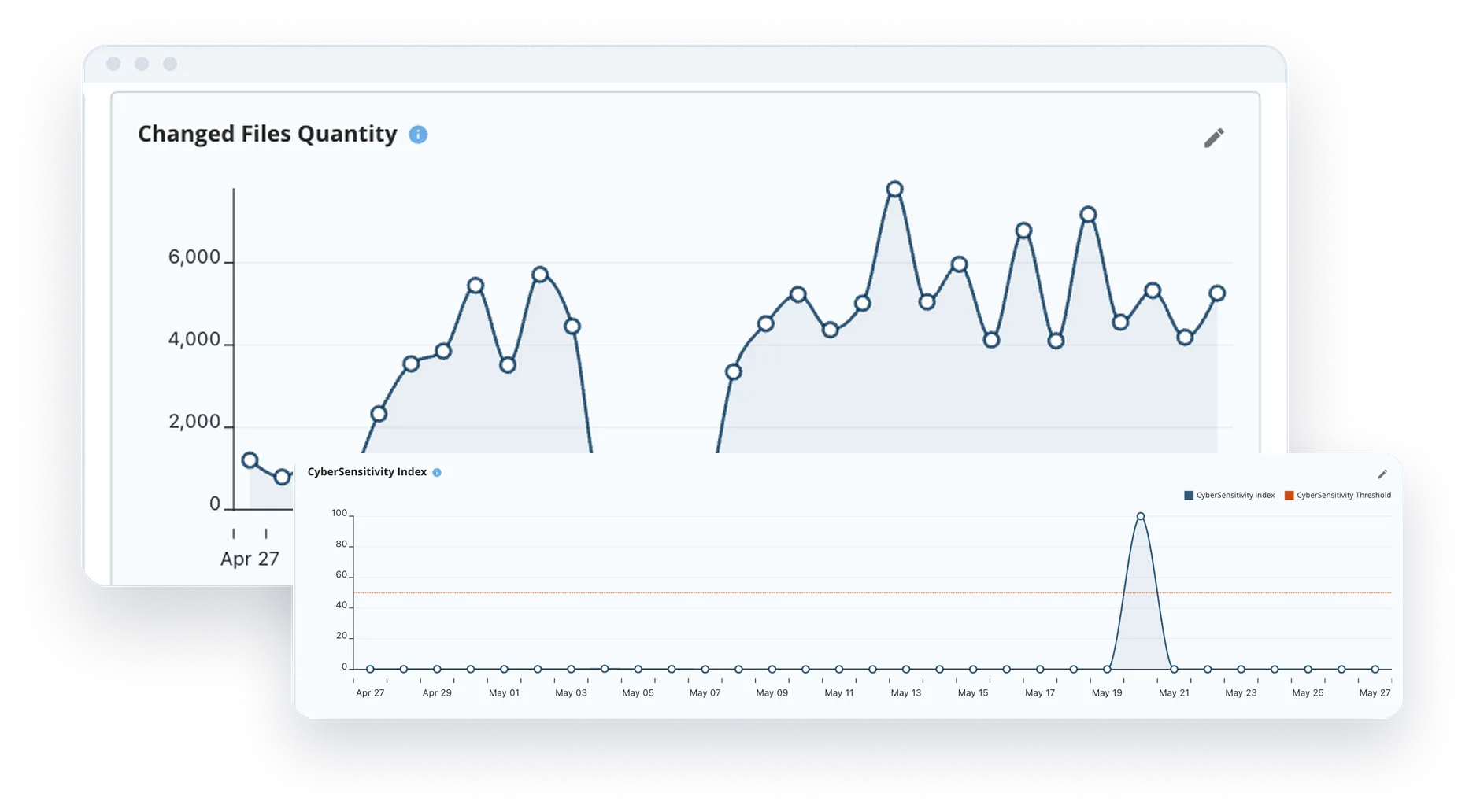
CyberSense tracks each database across every snapshot it has analyzed. Slow-moving corruption shows up as a pattern over time.
Page-level validation of SQL, PostgreSQL, Oracle, Epic, SAP HANA, MariaDB/MySQL, Db2, and more. Database Behavior Analysis (DBA) scores show how each database changes from scan to scan.
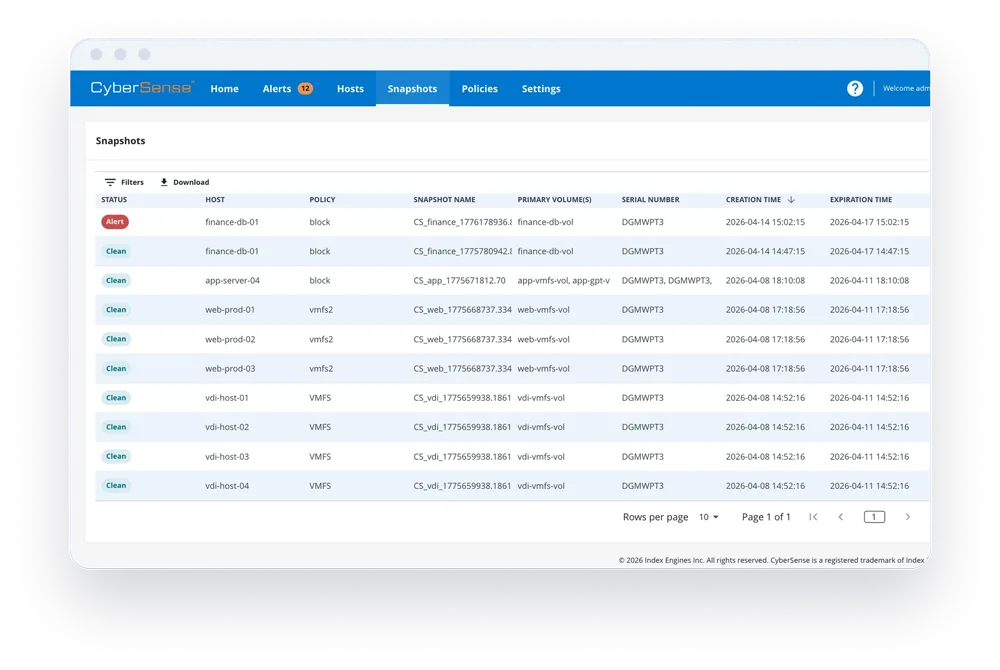
A history of every scanned database catch attacks built to move slowly.
Structural validation works on application-encrypted and hardware-encrypted databases, including Oracle Tablespace Encryption.
Catch More Than Ransomware
Database corruption alerts tell data owners when a database stops behaving normally, whatever the cause.
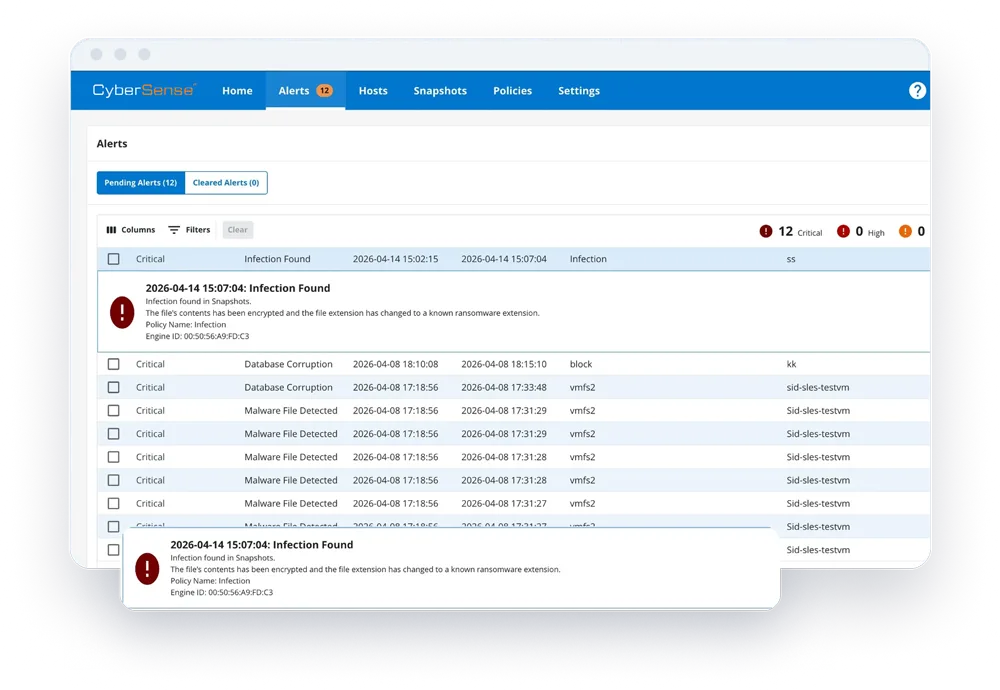
Forensics on every detection: what was affected, when it happened, and the last good recovery point.
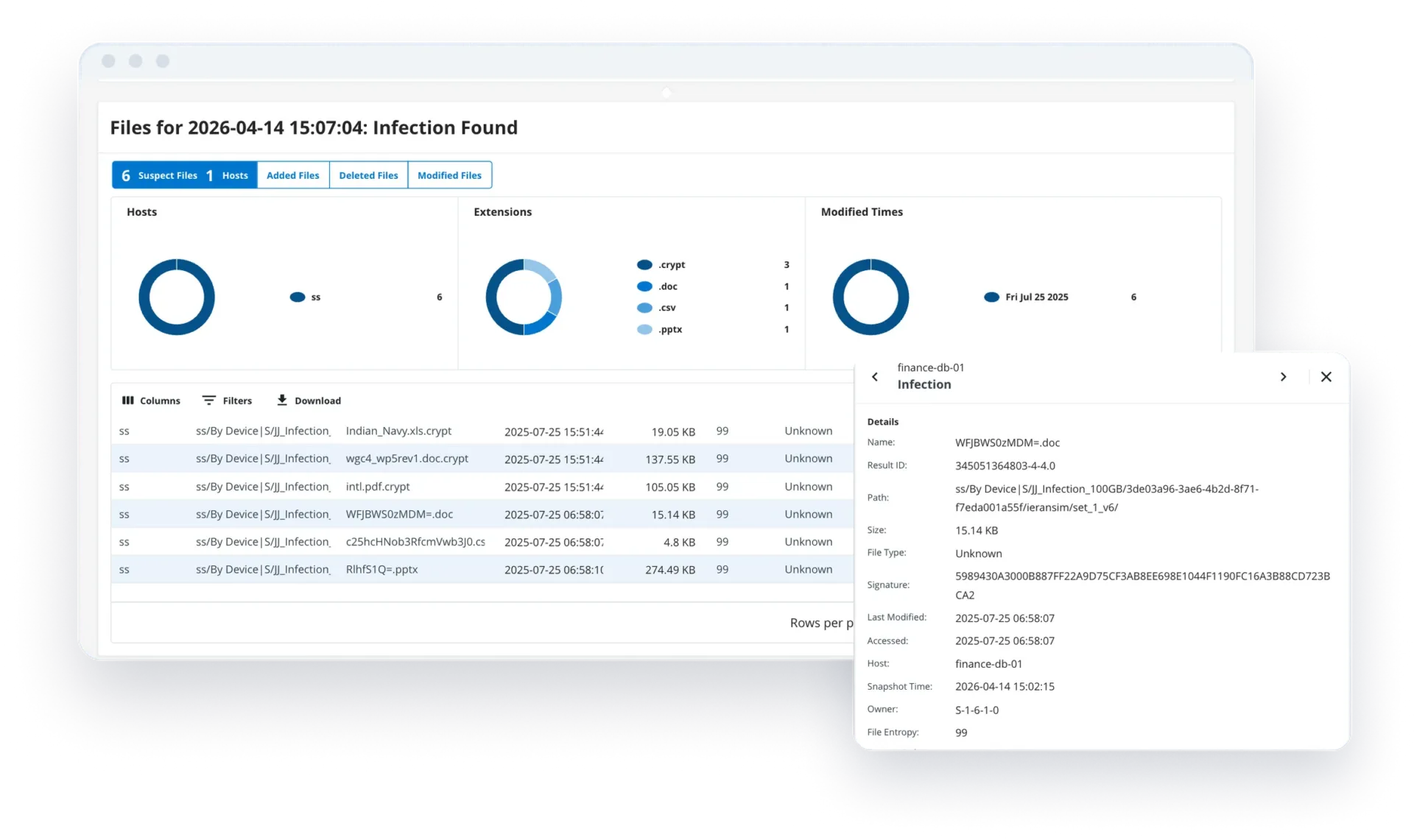
Alerts flow to SIEM and SOAR platforms, so security and infrastructure teams work from the same signal.
Leaves Production Compute to Production
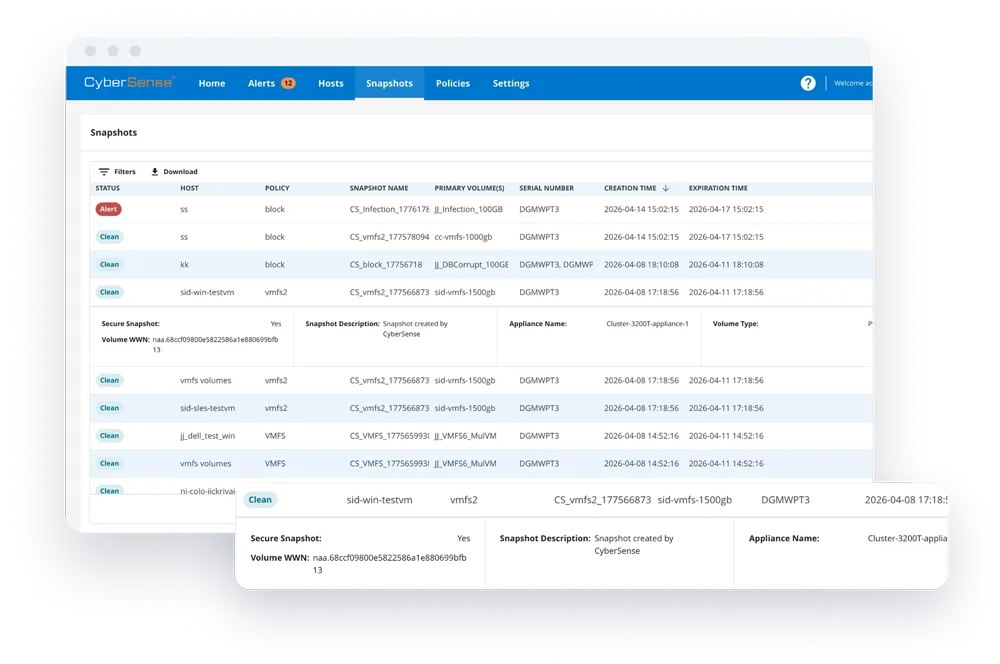
CyberSense validates snapshots and protected copies on its own resources. Database servers keep their CPU for the applications that depend on them.





accuracy in detecting ransomware corruption, validated by ESG
content-based analytics
ransomware variants analyzed by the CyberSense Research Lab
Cyber Recovery vault deployments
of data scanned daily

